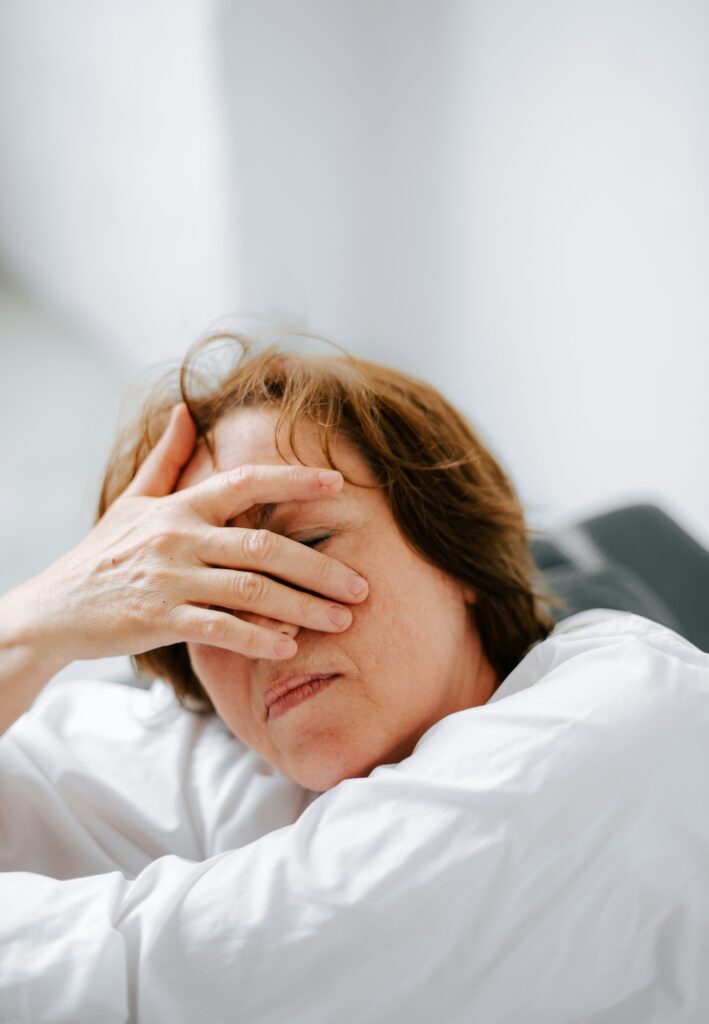
Wait . . . What? Me? Already? Perimenopause is the phase before menopause when your hormones start shifting, and for most of us, it shows up as confusing, unpredictable symptoms, and I can say, this was a confusing time for me!
Although I didn’t truly know it, my periods were what first told me something was off.
At first, I started skipping them, and I remember thinking, wait . . . I can’t be pregnant, right? I mean, I wasn’t too old to have another child, but I was on the fringe, and I certainly didn’t want another child . . . my kids were in high school, driving, working . . . no way I wanted a baby, no way! And in my case, my husband had a vasectomy, so this baby would’ve been quite the miracle – even though, I was not at all interested!
Then, after the ridiculous internal debating about a pregnancy test, she would come back with a vengeance!
Like . . Oh, you thought I was gone, don’t worry, let me make up for lost time! And that cycle, total pun intended, went on for a while . . . then it got even more adventurous!
My period decided to hang around for weeks at a time, and stay on her same schedule, which was always just under the four week time frame, throughout my life, already. You can picture it: full on, vengeful period for two weeks, and less than two weeks later back again.
Off to the gyn, I went. Now, I’m not truly writing, in this case, to talk about the solution, but you need to hear some of my gyn experience because what she said to me IS what this post is about. Among other things, she talked about ablation (we can get into that technique later), but in the midst of vengeful periods, procedures that should sound alarming or frightening, or at the least I should be super curious about, didn’t have me batting an eye. What did make me jerk and lock eyes with the doctor were five words “It (the effects of the ablation) should last about five years” okay, I say to myself, that is a good amount of time to have some relief, then she said “. . . and by then you’ll probably be in menopause.” Wait . . . What? Menopause? Me?
No one had ever said that word to me before about me. Not once.
I just sat there thinking: Me? Now? Already?
Haha, joke’s on her by the way, after that five year time frame, I was not in menopause . . . that’s when Candy the cantaloupe-sized fibroid arrived (you can learn more about her in my post: Meet Candy . . . What Nobody Tells You About Fibroids and Menopause)
Quick Answer: What Is Perimenopause compared to Menopause?
Perimenopause is the phase before menopause when your hormones start shifting, and for most of us, it doesn’t look anything like what we expected.
- Symptoms can start gradually, almost imperceptibly
- The perimenopause phase can last for years
- Symptoms can come and go unpredictably
- Your periods often change first
- Symptoms can feel completely random
Then along comes menopause itself, and here’s the part that blew my mind, the difference between perimenopause and menopause is just one day: 12 months without a period, and that’s it. Everything before that? Perimenopause. Everything after? Menopause. That’s it . . . No blaring trumpets that things have ended and your body is back to normal, no finish line to instant relief from the fun your changing hormones have brought on . . . (except from monthly periods).
And even that realization didn’t exactly calm things down. If anything, it opened the door to more questions.
Because now I’m thinking, okay . . . if this isn’t a clean transition, if this isn’t something that just happens and then ends, then what exactly is going on here?
So, naturally, I did what I always do, I researched, and that’s where things went from confusing to overwhelming pretty quickly.
There were too many symptoms, too many “this might be perimenopause . . . or it might not.” Too many “this might help . . . or maybe it won’t.”
It felt like everything could be perimenopause, or nothing could be.
And layered on top of that, I have Leiden Factor V, which complicated everything even more. At the time, I had been told hormones were probably off the table because of clotting risks so I ignored what I saw about that and kept digging because it wasn’t just “What’s happening to my body?” It was became, “What am I even allowed to do about it?”
And that’s a very different question.
If you’re in that place, trying to match what you’re feeling to what you’re reading, trying to decide what’s real and what’s just noise, you’re not alone . . . Not even close.
And if you’re noticing changes but can’t quite put your finger on them yet, this might help:
12 Perimenopause Symptoms Nobody Told You About
What I Thought This Was Going to Be
Before any of this, I had a completely different picture in my head. I thought perimenopause was this gradual lead-up to a moment. Like you’re walking toward menopause, and eventually you just . . . arrive. So, in essence, suck it up and deal with it because there’s a finish line.
Instead, it’s more like: 11 months and 29 days = still perimenopause, the next day = menopause
That’s it, no moment, no announcement, finish line, no “Woot woot, you made it!”
I thought once I got there, everything would settle down, symptoms would ease up, and things would go back to normal. Nope! Menopause isn’t the finish line . . . It’s just part of the race. The symptoms of perimenopause just turn into menopause symptoms and can keep going, for years . . . Sometimes a decade or more!
And Then There Were the Symptoms
Once I started paying attention, it wasn’t just my periods anymore.
It was everything.
The things you hear about like hot flashes, sleep issues, mood swings, but also the quieter things that don’t get talked about as much and are super easy to almost talk yourself out of noticing.
If you laid them all out, it would look something like this:
- Irregular periods
- Hot flashes
- Brain fog
- Sleep disruption
- Mood changes
- Fatigue
And sometimes, those symptoms are tied to things you wouldn’t expect, like what happened with my fibroid situation.
The Part Where I Thought I Was in the Clear
And I’ll be honest . . . For a while, I thought maybe I was getting lucky. Other women around me were talking about hot flashes, and I was thinking . . . huh, not happening to me, amen!
But, it was like spring in New England. You know it’s coming, you can feel the shift, but it’s still cold enough that you think you’ve got time. Then suddenly, it’s 85 degrees and your shorts and open-toed shoes are still packed away somewhere.
I thought I had more time, and then the hot flashes showed up like they had something to prove. Like: “Oh, you thought you were skipping this part? That’s cute.”
That smug feeling I had? Gone, immediately.
The Conversation I Wasn’t Expecting to Have
Eventually, after more conversations with my gynecologist and my primary care doctor, and looking more closely at my medical history, it was determined that I could go on hormones.
That alone was a shift because I had spent so much time thinking that wasn’t even an option, but then I asked what felt like a very reasonable question: How long would I be on them?
And the answer was: Maybe the rest of your life.
What? That was not even remotely the timeline I had in my head.
There was some reassurance about ongoing research, new information, future options . . . But still. That changes how you think about all of this. (By the way, It’s been six weeks, and it has changed my life! . . . I’ll be sharing about that, soon!)
So What Is Perimenopause, Really?
Perimenopause is the time leading up to menopause when your body starts changing how it produces hormones. It’s not a clean transition, and it doesn’t follow a predictable pattern.
At some point, I had to stop trying to define it clinically and just explain it in a way that made sense to me.
And if a friend asked me now, I’d probably say:
It’s your body changing the rules without telling you, and expecting you to keep up anyway. It’s unpredictable, it doesn’t follow a clean timeline, and the the symptoms don’t arrive in any kind of organized way. I’d say you might spend a lot of time wondering if what you’re feeling is even real, and no one really prepares you for how personal it feels.
Let’s Just Say This Clearly:
- You’re not overreacting
- You’re not imagining things
- You’re not “just getting older.”
You’re in a power surge, and this is where it shifts, because once you understand what’s happening, even a little, you realize something important: This isn’t just something you have to get through, it’s something you can learn to move with, and you don’t have to accept it blindly . . . You get to decide how you live in this phase with more awareness, more intention and honestly, a little more control than it first feels like you have.
Start Here
If you’re trying to figure out what’s actually happening in your body:
→ Get your Free Power Surge Symptom Tracker
Start paying attention to patterns . . . Start making sense of what feels random . . . Walk into your next appointment with real information.